

Appliances
PTU RF Series — Appliance Insulation
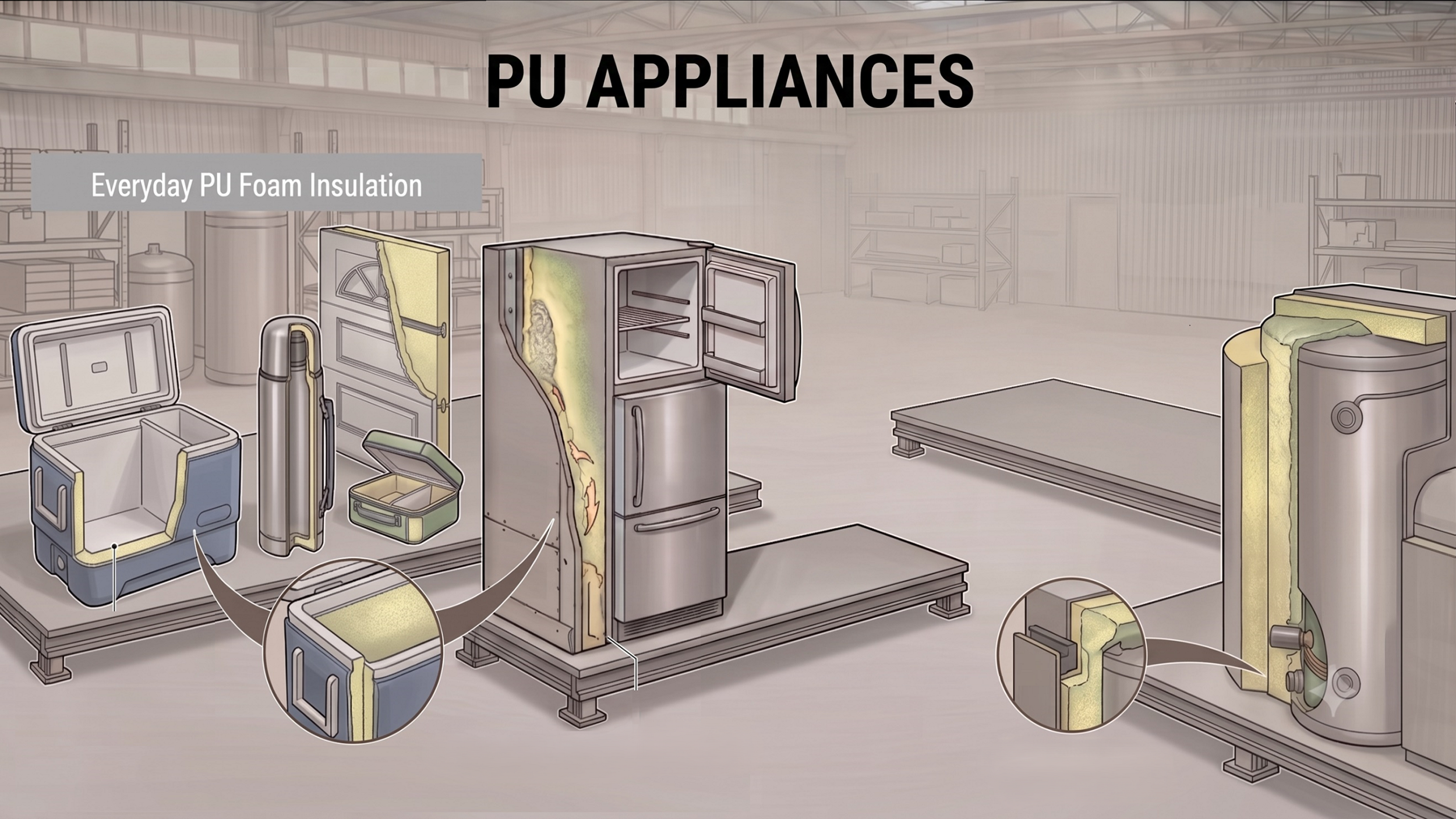
PTU supplies formulated rigid polyurethane (PUR) foam chemical systems used by appliance manufacturers to produce thermal insulation in refrigerators, freezers, hot water storage units and other temperature-controlled appliances.
During appliance manufacture, the two-component PU system is injected into the cavity between the inner and outer skins of the appliance. The foam expands to fill the available space and cures in place, forming a lightweight, rigid, closed-cell insulation core that can provide low thermal conductivity and help maintain the required internal temperature.
PTU develops rigid foam systems to suit specific appliance designs, production equipment and processing requirements, including formulations designed to balance thermal insulation performance, adhesion, dimensional stability and production cycle times.
Product Features
Thermal Insulation Performance
Low thermal conductivity helps reduce heat transfer through the appliance structure, supporting efficient temperature control and reduced energy consumption during operation.
Lightweight Rigid Core
The rigid foam core provides insulation while contributing to the overall rigidity and dimensional stability of the appliance construction without adding unnecessary weight.
Strong Adhesion to Appliance Skins
Suitable formulations can provide good adhesion to commonly used appliance materials, helping the foam core remain integrated with the appliance structure during service.
Efficient Production Cycles
PTU rigid foam systems can be formulated with reaction and cure profiles suited to the manufacturer's equipment and production requirements, helping to achieve appropriate jig dwell and demould times and support efficient manufacturing.
Long-Term Insulation Performance
Closed-cell rigid polyurethane foam can provide durable thermal insulation performance over the service life of the appliance when correctly formulated, processed and installed.
Contribution to Appliance Energy Efficiency
The insulation performance of the PU foam can contribute to the overall energy efficiency of the finished appliance. Final energy ratings and certification, however, depend on the complete appliance design, performance and applicable regulatory or certification requirements.